Category: New releases

10 September 2026
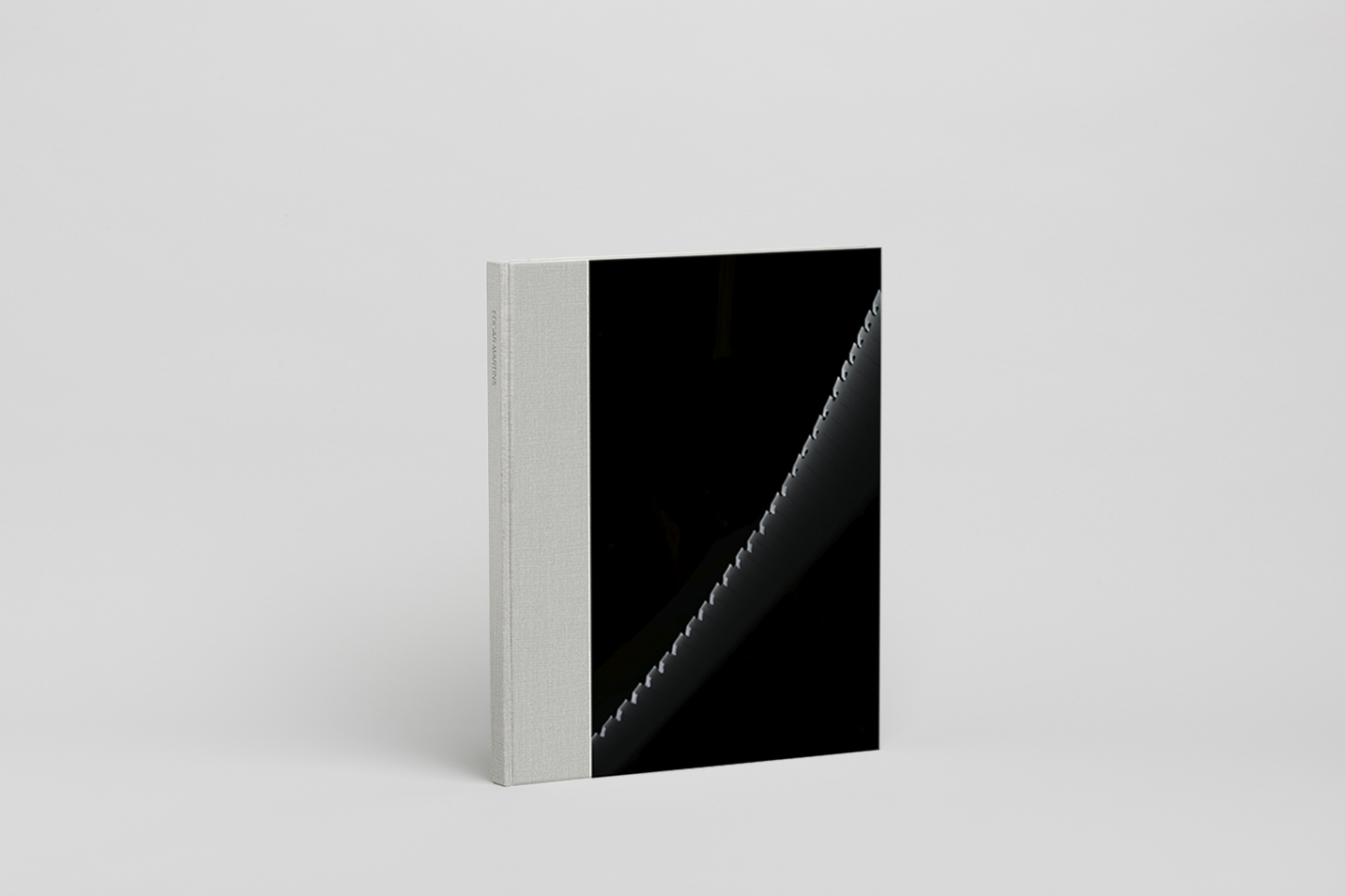
This series has its origins in a 2016 collaboration with the Institute of Legal Medicine and Forensic Sciences in Portugal (INMLCF), in which Martins worked with letters written by individuals who had taken their own lives. The present work represents a significant and deliberate shift in focus: rather than documents that accompanied an irreversible act, the letters gathered here are ones that interrupted it. Developed between 2024 and 2025 with the INMLCF and several mental health charities and suicide prevention groups, the project draws on research into confession letters written by individuals who contemplated harm — to themselves or others — but chose not to act after committing their thoughts to paper. The archive is quietly extraordinary in its range: letters that were never sent, a note articulating the decision to join a terrorist organisation, an inscription justifying a crime of passion, a will disowning a son. Several of their authors kept these letters for years afterwards as private testimonies to a struggle overcome. The work takes as its epigraph a passage from one such letter: “When I looked inward, I found nothing but a landscape of realised loss. Only obscurity, the complete absence of landmark, ceaseless oppression, and anguish.” The author later confided to Martins: “I was navigating the landscape of my past under the misconception that I had no voice. It was only as I wrote these words down that I realised I had already charted a course for responding to the catastrophic events of my life.” Writing, here, does not describe the crisis — it resolves it. The letter becomes not a farewell but an act of survival.Using medical imaging equipment, Martins captures only the edges of these letters, their contents remaining hidden. The resulting images move between documentation and abstraction — bearing witness not to what the letters contain but to the material fact of their existence: the physical trace of an act of writing that, in each case, altered the course of a life.The choice of medical imaging is not incidental. These are instruments designed to see through surfaces — to render the interior legible without opening it, to diagnose without exposure. Turned on these letters, they perform a structurally similar operation: they acknowledge the presence of something profound without violating its privacy. The edge becomes at once a formal and an ethical position — the precise limit of what art may touch, and what it must leave intact.What the series ultimately asks is not whether such material can be shown, but what it means to show it at all — how art might hold open a conversation about mental health without reducing the suffering it encounters to illustration, evidence, or spectacle. (This publication will be launched in 2027 and is now available to pre-order in our Shop.)

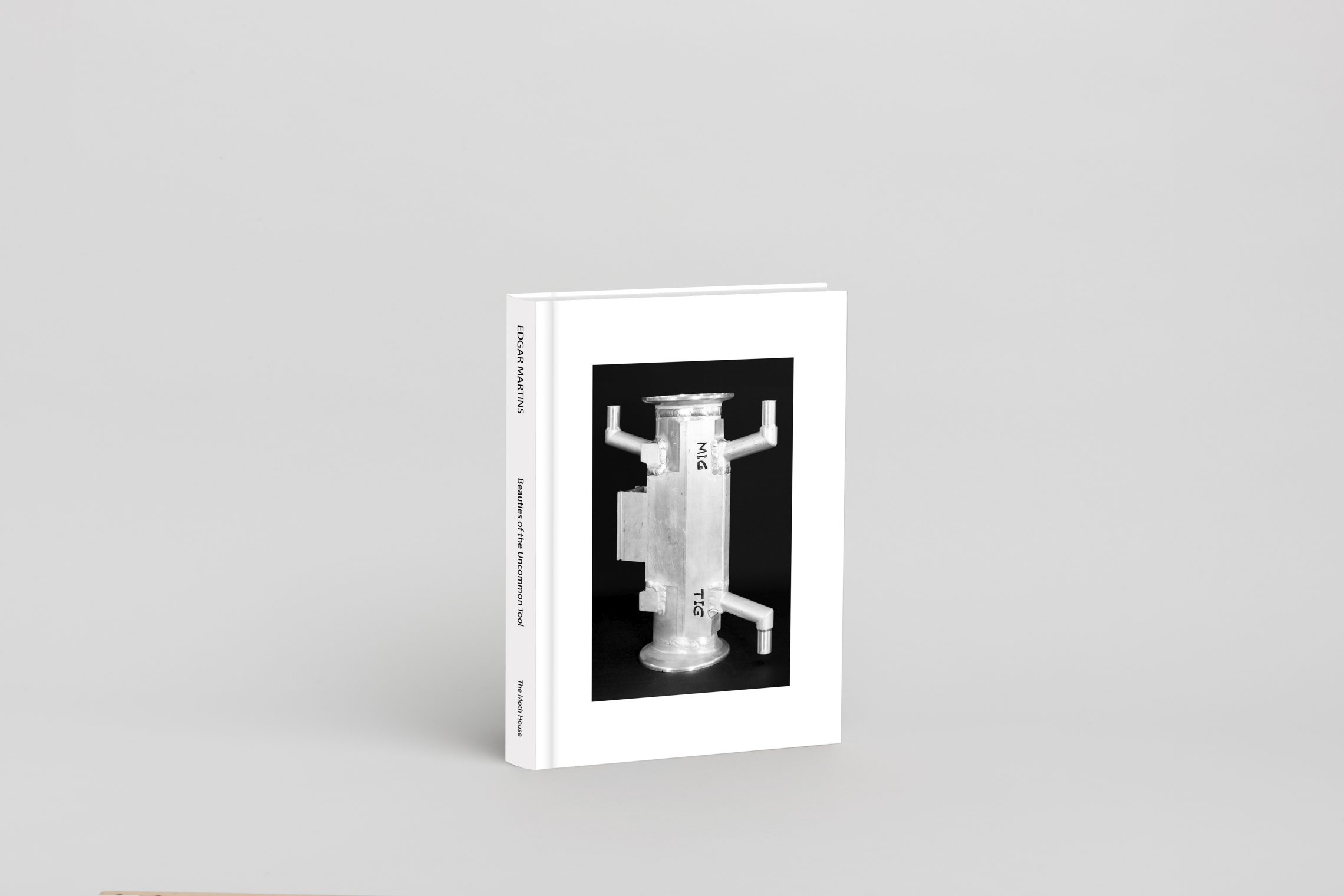
Assembled from ten years of engagement with CERN’s photographic archives — the European Organization for Nuclear Research — this project surveys the material debris of high-energy physics: the failed experiments, fractured components, and obsolete instruments originally engineered for the Large Hadron Collider (LHC). Within Quantum Chromodynamics, the fundamental constituents of matter are, by their very nature, inaccessible: quarks remain permanently bound within hadrons, withdrawn from the observable world by the mechanism physicists call confinement. CERN’s apparatus exists precisely to breach this condition: to act as a transparent conduit, engineering the means by which the invisible might be made visible. The objects catalogued here occupy an ontological paradox. Designed to reveal the unseen, they have entered the archive — and so become visible as objects in their own right — only because they failed. Stripped of scientific function, they can no longer serve as windows onto the quantum realm. Failure arrests them in the material world: cracked housings, calibration remnants, dormant lenses stilled mid-task. Stubborn, irreducibly present, they remain beautiful precisely because they no longer point beyond themselves. Walker Evans’s 1955 photo essay Beauties of the Common Tool isolated familiar hardware — wrenches, pliers, shears — against spare backgrounds to reveal the latent dignity of utility. Here, the isolated objects are hyper-specialised, stripped of all recognisable purpose: not the common tool but the uncommon one. Their function was never legible to the layperson, and their failure has rendered it permanently so. What follows, then, is offered as notes toward a taxonomy, not the thing itself. Failure does not classify cleanly. It has no serial logic, no periodic table. Each object breaks the frame of the last, resists grouping by cause or function, refuses to settle into a genus. The archive is not a taxonomy completed but one interrupted — a record of the many different routes by which very different apparatus arrive at the same condition: no longer transparent to anything beyond itself. What remains is not data. It is the sculptural weight of matter that has stopped reaching — an archive of instruments returned, by failure, to the condition of things. (This publication will be launched in 2027 and is now available to pre-order in our Shop.)


23 January 2024
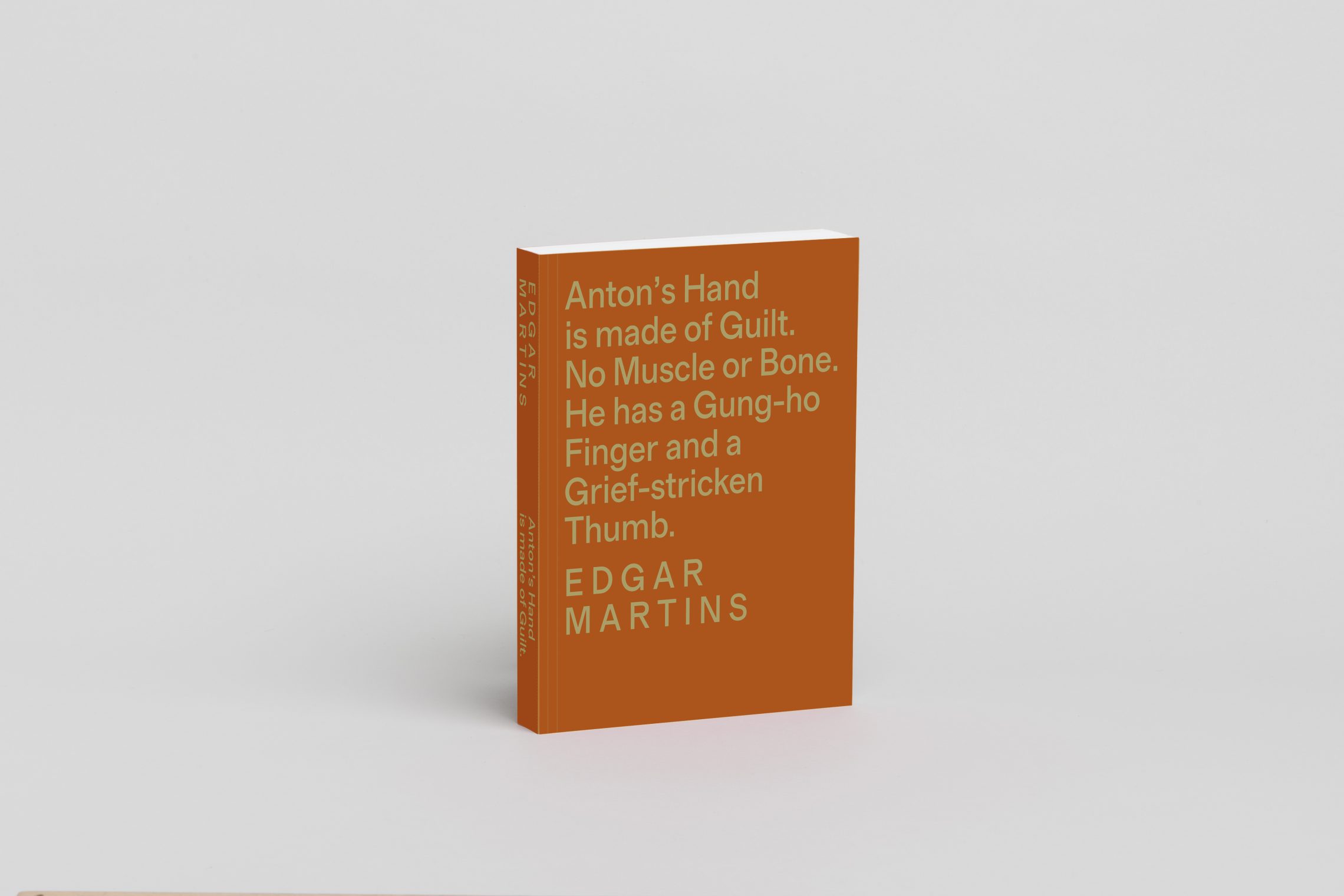
Edgar Martins' forthcoming book is a research-based documentary project, a novel, a journal, a lipogramme and an imaginary anthropological study in one. It includes original photographs, archival photography and images researched from dark web forums, an album of probing soundscapes exploring the everyday experiences of a war correspondent as well as a book of drawings of myriad war scenes (collector's edition).This book will be launched in April 2024 and is now available to pre-order.

7 December 2021
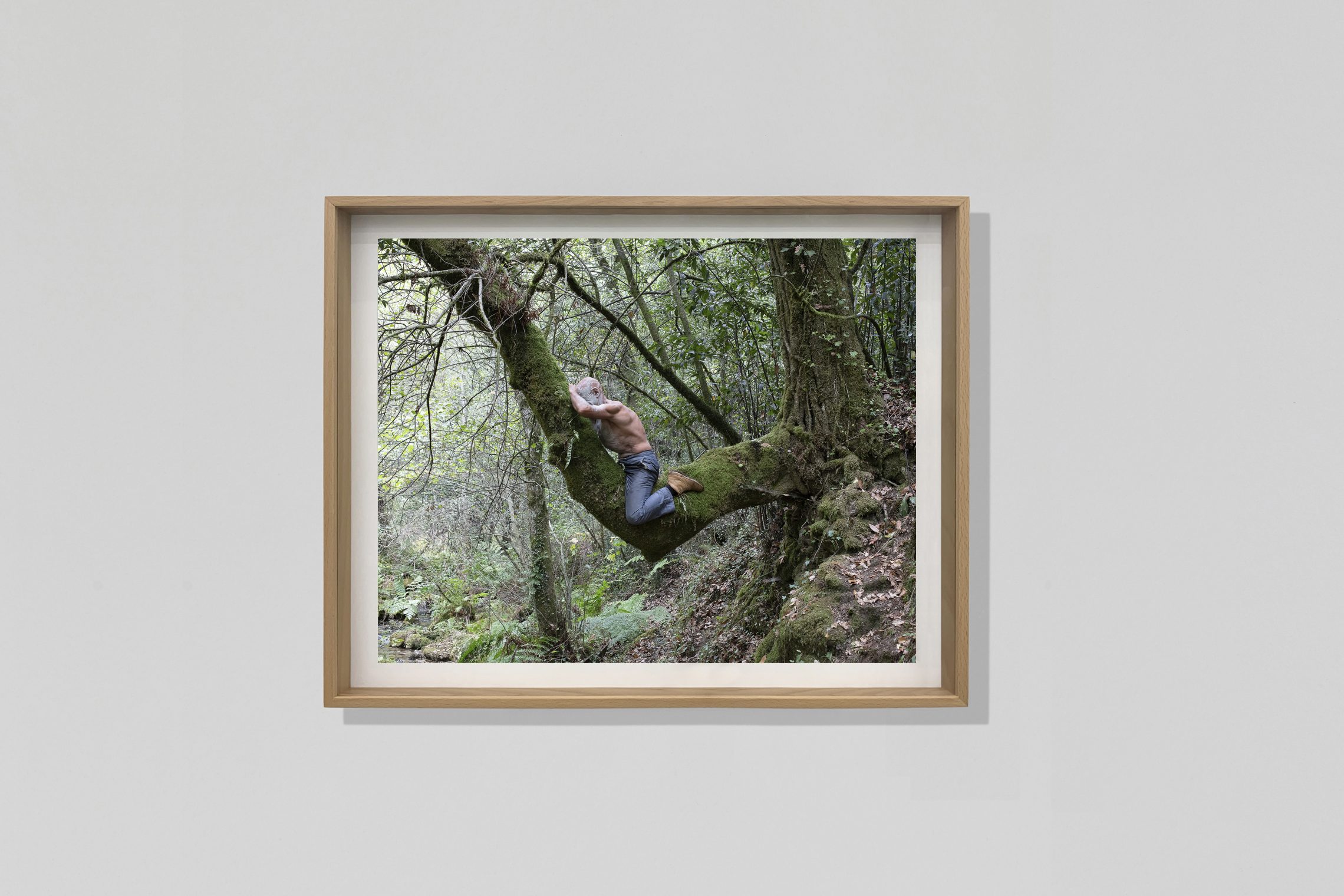
We are pleased to announce the sale of the fourth and fifth prints of our print sales program, focusing on the work of a small number of mentees from our Artistic Practice Support scheme. The revenue raised from the sale of these artworks will support the artists in question as well as our free mentorship program. This month we are pleased to launch 280 x 360 mm archival pigment ink prints by Polly Tootal and Luís Preto, in an edition of 3 + 1 AP.

We use cookies. By browsing our site you agree to our use of cookies, Find out more